
Nature journaling equipment
You need very little equipment to start nature journaling, but it is a hobby that has scope to collect a lot of resources! Hopefully this post will help you get started, and also give you some ideas for items to add as you become more experienced.
The Absolute Basics
A sketchbook -
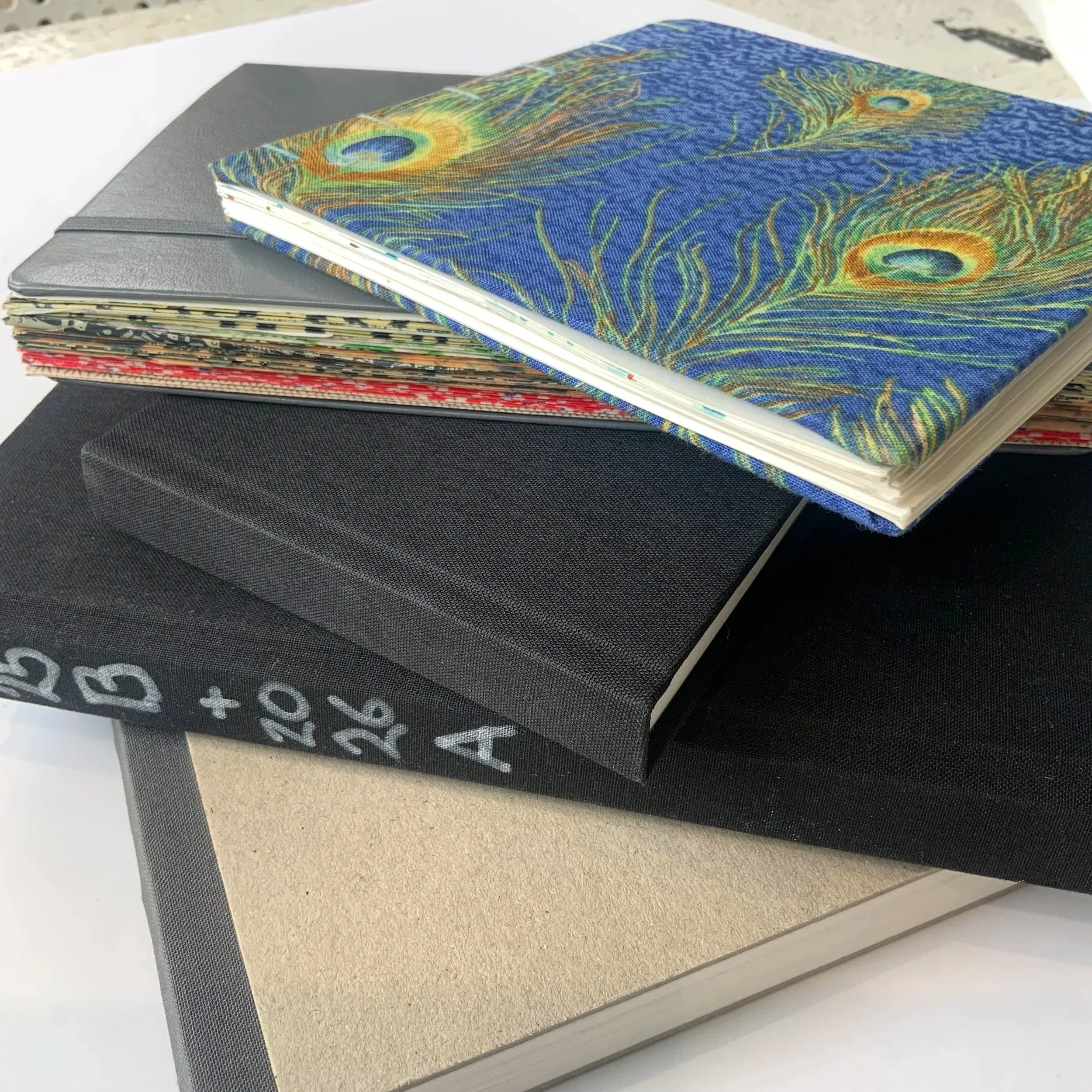
This is very much a matter of personal preference. Some people like a bigger book, but try to keep in mind that you will want to be able to carry it around easily. I find A5ish to be a good size, although my current book is square, and I like the wider format when it is opened out. You might like to have more than one book, perhaps a tiny book for tiny sketches, a midsize book for your main field work, and a large book at home for more ‘finished’ artwork.
Pictured from top to bottom: small square handmade book; Moleskine A5 diary with washi taped pages (my first nature journal); Seawhites of Brighton A6concertina book; Kunst und Papier watercolour book slightly larger than A5; Kunst und Papier 21cm square project book.
Consider the type of paper in your book carefully. If you plan to use only pencil, you can probably get away with quite thin paper. My first nature journal was a basic week-to-view diary, and I taped the page edges for added strength. If you like to stick things on or use wet media, however, you may want to choose a mixed media or even watercolour sketchbook.
Something to draw and write with -
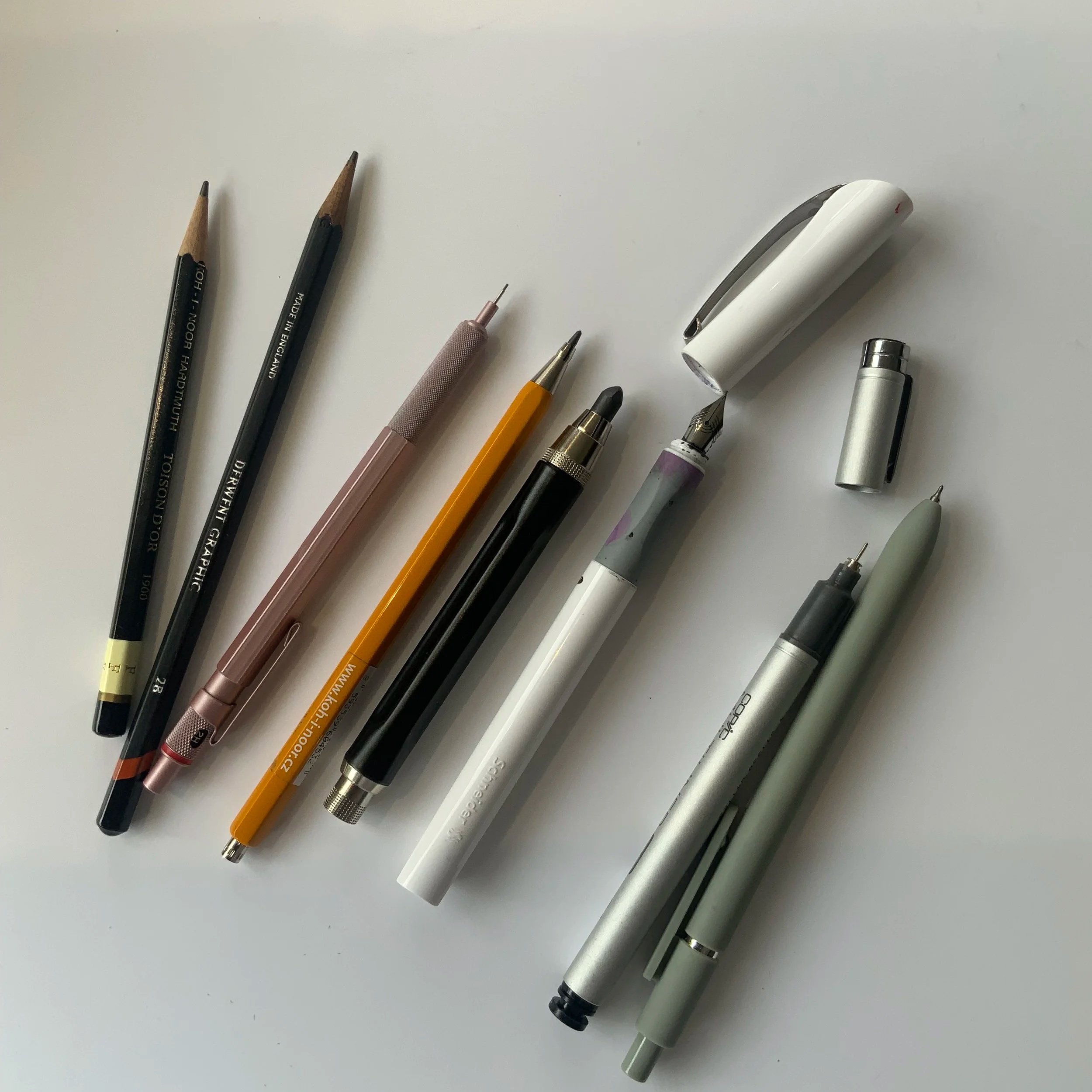
All you really need is a pencil, and this would be the simplest choice for journaling that allows for writing and drawing. A mechanical pencil removes the need to sharpen, and you don’t even need an eraser.
A small collection of different grades and levels of chunkiness means you can create more interesting, shaded drawings. Add a pen as well for more defined lines. I recommend a permanent ink pen, especially if you also want to watercolour over it, and in case of rain spots. Many people like to use a fountain pen, but a fineliner or even a biro would work.
Pictured from left to right: two basic normal pencils; mechanical pencil; slim and chunky clutch pencils; fountain pen; fineliner; gel pen
Beyond the Basics
More drawing ideas -
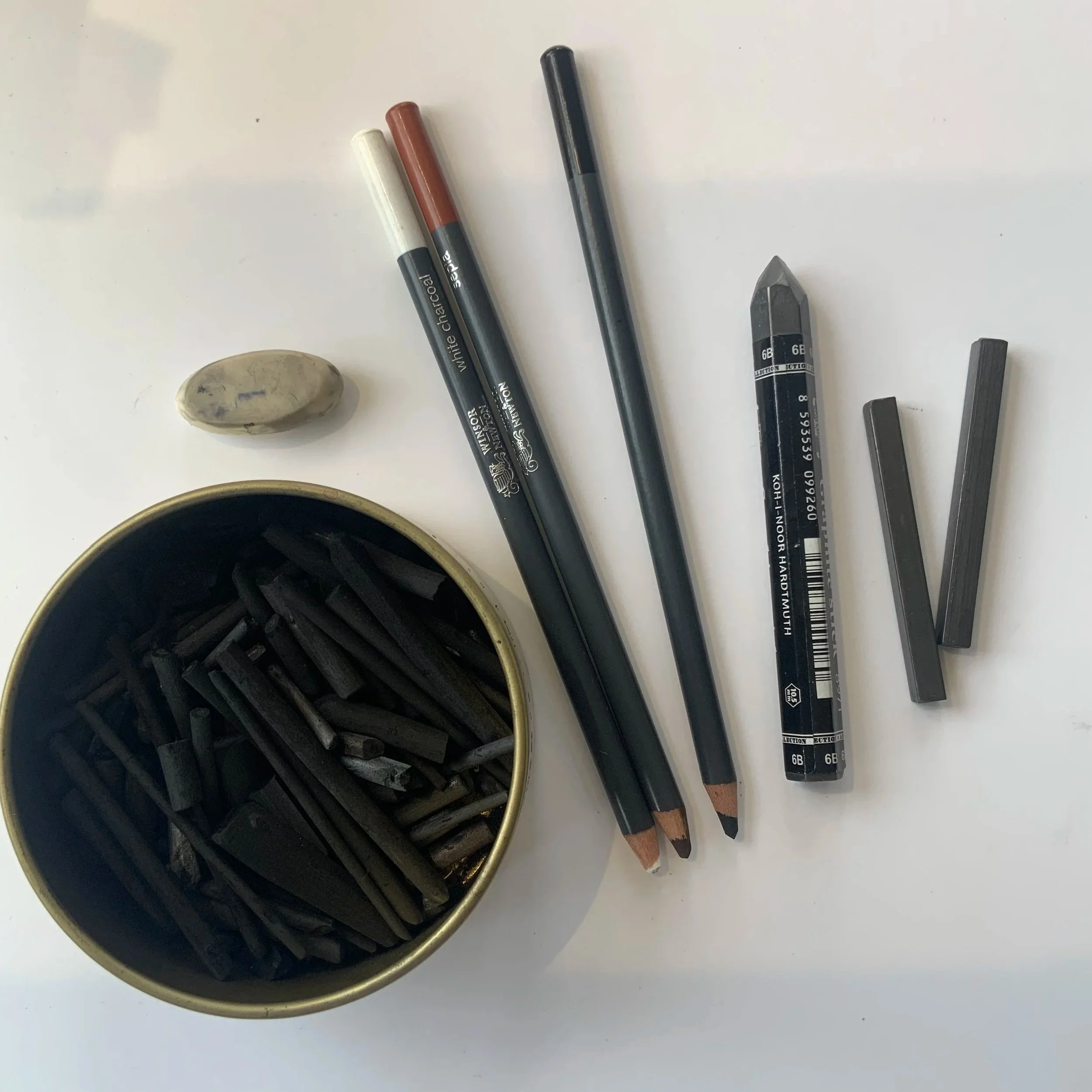
Pictured from left to right: willow charcoal (messy!); compressed charcoal pencils in white, sepia, and black (less messy, but will still need fixing when you get home); a chunky graphite pencil (my father-in-law found this very exciting when he and I went sketching last week); graphite sticks
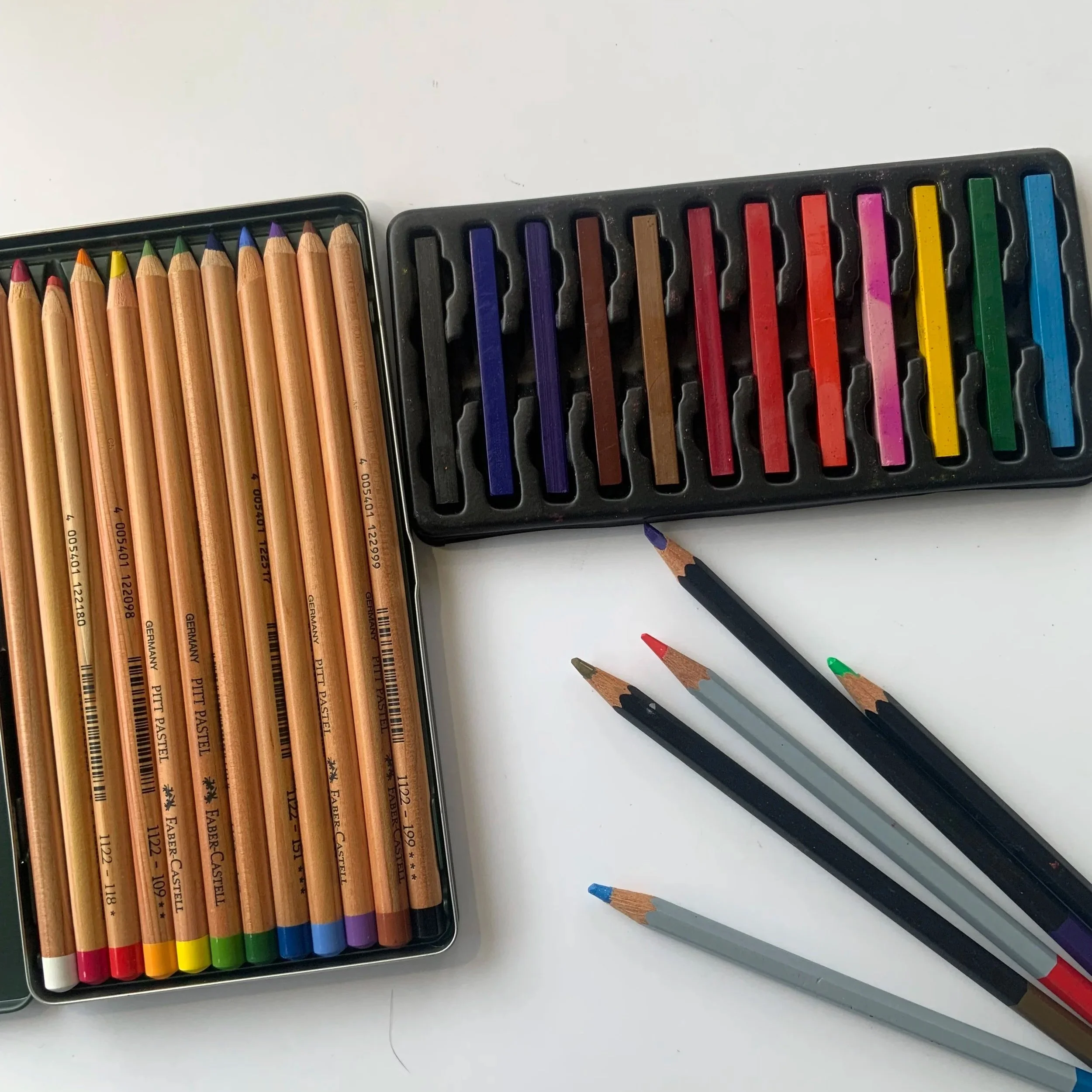
Add some colour -
Adding colour requires carrying more out with you, but this should not put you off if you really want it! A set of easily coloured pencils are great, especially ones that will blend easily to make further shades of colour.
Pictured left to right: coloured pastel pencils; hard crayon sticks; graphic and watercolour pencils
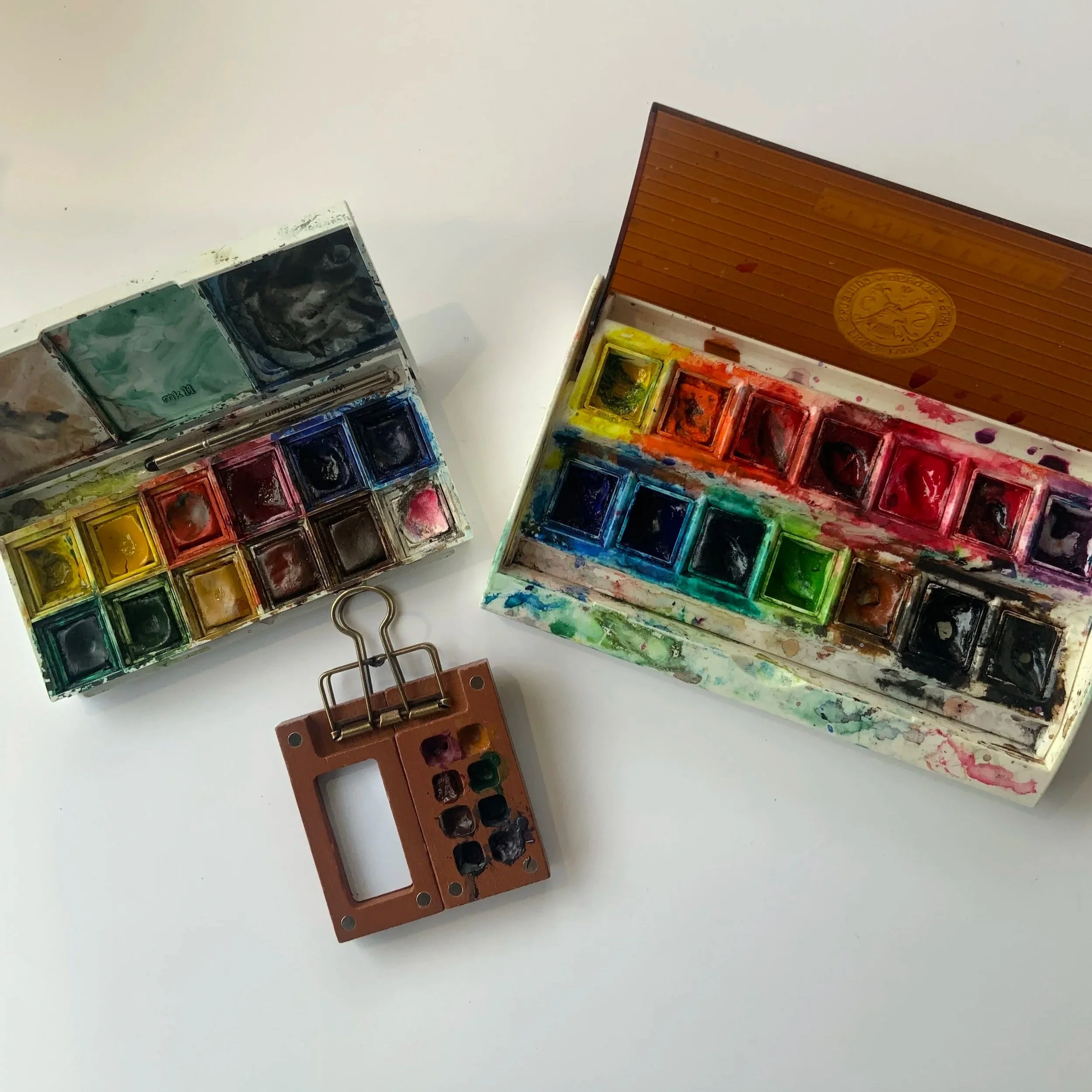
Many nature journalers like to use watercolour, and you can buy small sets of watercolour pans especially for using out in the field. You will also need a small pot for water (collapsible ones are available), and brushes. I really like those that have lids that then become the brush handle. You can also find water brushes which have a squeezable handle for water.
Pictured left to right: Winsor and Newton sketch set of watercolours; mini watercolour palette I found on Vinted and filled with my own paints (the clip helpfully attaches it to a sketchbook); Sennelier watercolours
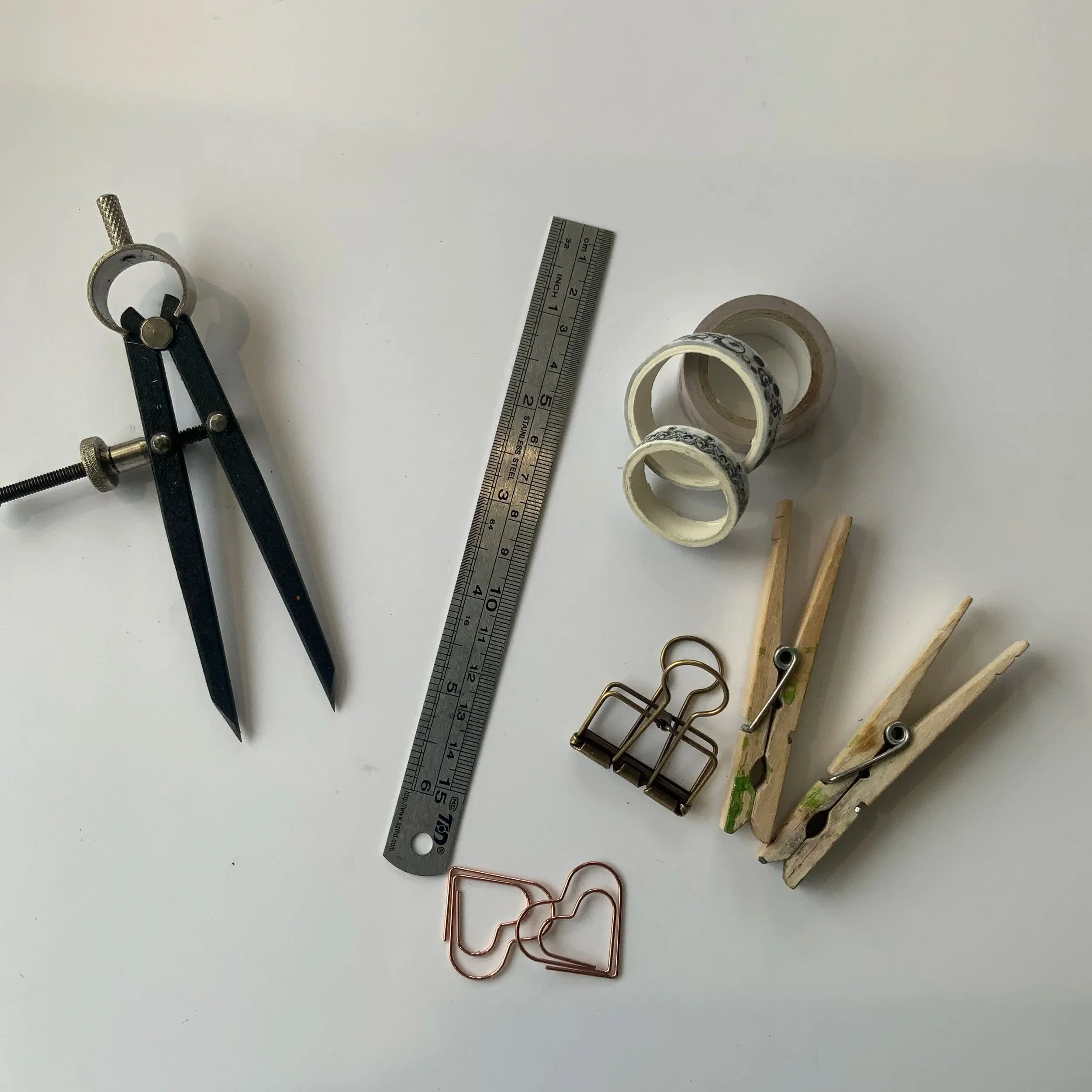
Little extras -
I like to take a roll of washi tape with me, to stick in feathers, leaves and other tiny specimens. Clips or pegs will stop things blowing away.
A small magnifier will allow you to look more closely at specimens, and a bug pot is useful if you’re interested in drawing insects. Many nature journalers also like to have a set of calipers and a ruler handy for taking measurements.
Pictured left to right: measuring calipers; a small ruler, washi tape, paper clips, small bulldog clip, pegs
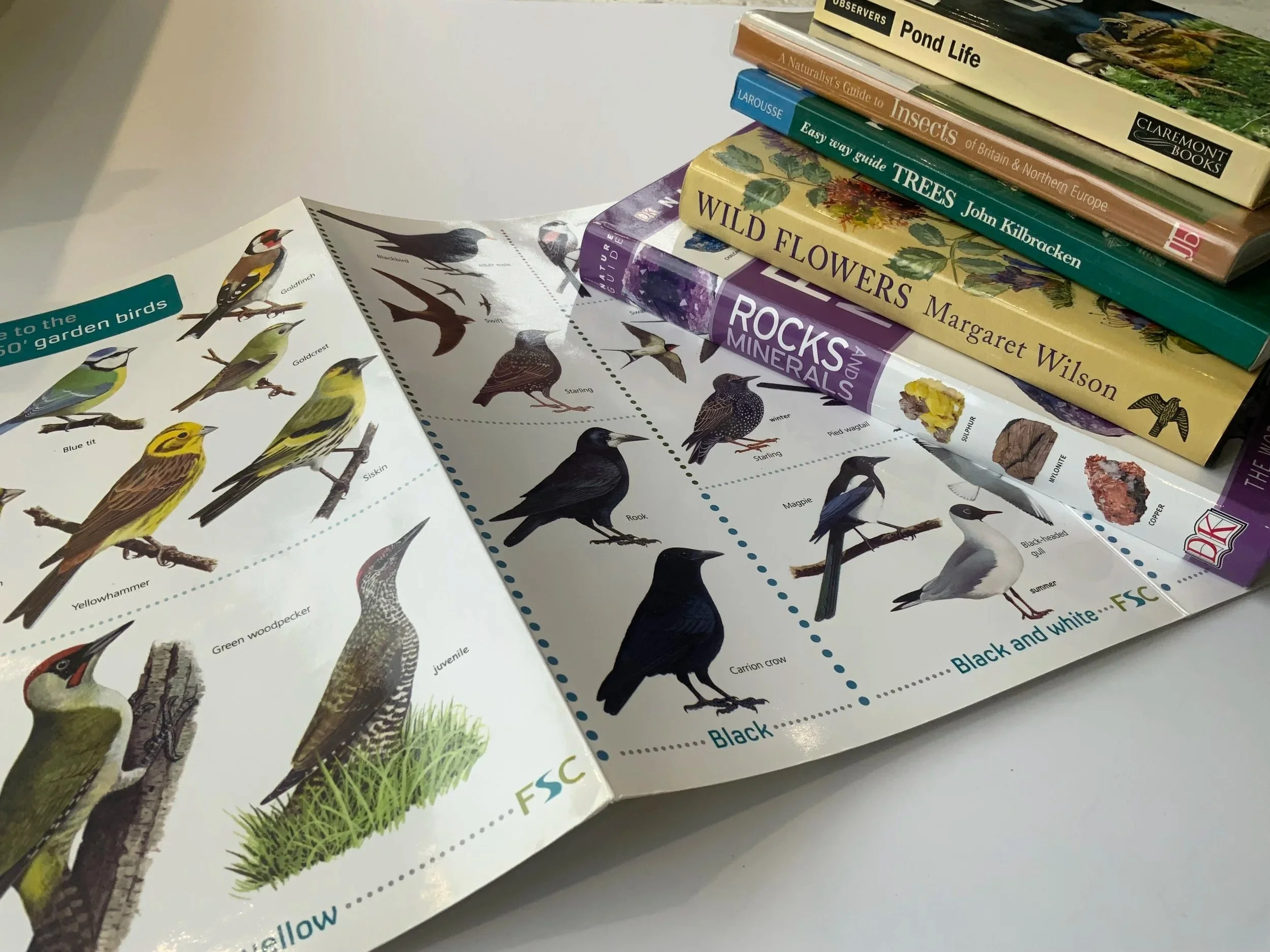
You might like to have a small identification book handy, especially if you are particularly interested in one type of species such as butterflies, birds, or trees. If it’s too much to carry your library around with you, though, just make sure you note down as much information as you can so you can look up your specimen at home.
Don’t forget technology as well! Your phone, if there is signal where you are, is a huge library of information, as well as a camera. I have an app for identifying birdsong, an app for identifying stars and constellations, another that is a compass, and there are many more available to help you. The torch is good for peering into dark holes, and you can also buy a small magnifier to attach to a phone camera and turn it into a mini microscope.
Coming up…
I’ll also add a blog post for what you need specifically for warm weather nature journaling, and later in the year for cold weather nature journaling.